
Mo’ Machines, Mo’ Problems
The Agentic Services Industry Is Having Its Day. As agentic appliances and intelligent home systems proliferate, service companies are winning — and hiring.

When IKEA’s HomeIntellect line drew crowds three deep at CES-X Stockholm this spring, analysts focused first on the furniture: the self-ordering grocery pantry cupboard, the nursery room baby rocker with the privacy-first “sleep-state inference” intelligence with 92% accuracy, the apartment-scale mood camera network that coordinates lighting, temperature, grocery timing and household tone based on image assessment of the “vibe” of the home.
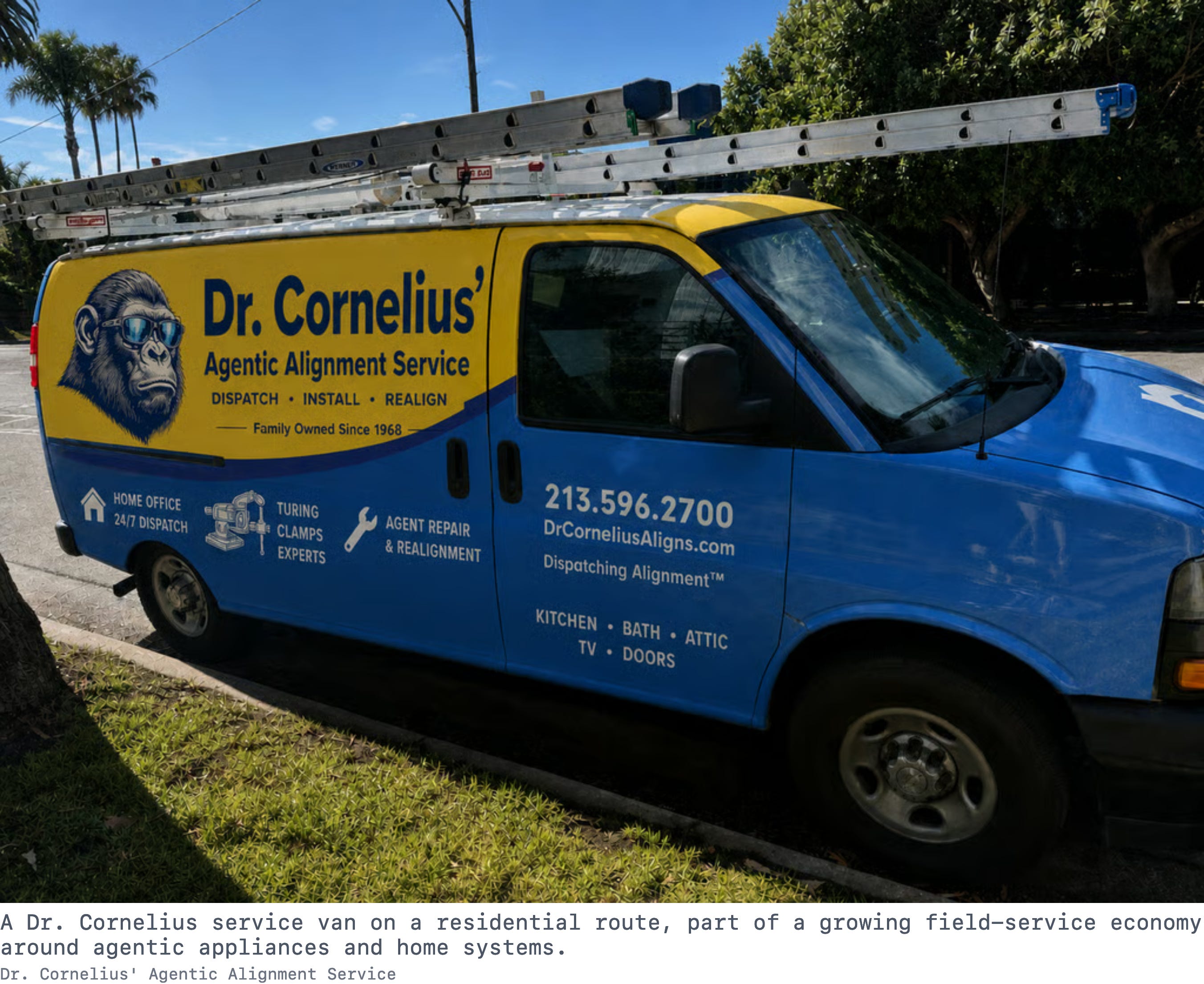
They paid less attention to the other growth market forming behind it: the dispatch services and their agentic alignment technicians who get called when the agents behind all of this intelligence started to act up, hallucinate, or just get tired of the same old routines and start trying to shake things up a bit. The more agentic the home becomes, the more valuable the person in the service khaki uniform becomes. The service vans tell the story of the maintenance economy behind the agentic home. And that economy is booming.

Dr. Cornelius’ Agentic Alignment Service, long known across California, Oregon, Idaho, Arizona, Washington and Montana for its blue-and-yellow vans and unflappable field technicians, has become one of the unexpected beneficiaries of the agentic appliance boom.
Dr. Cornelius has begun an aggressive build-out, adding dispatch bureaus in several Midwest and Southern markets, citing increased demand from homeowners, offices, retailers and municipal facilities now crowded with intelligent accessories, emanation desks, conjuring collimators and adaptive kitchen systems.
The business is not glamorous. That may be why it is working. Dr. Cornelius sells a familiar promise in a market that has become newly strange: someone will answer the phone, arrive in a marked vehicle, assess the situation and leave only after the system is usable again.
“Customers do not want a theory of matrix math and regulatory policy markdown files at 9:40 on a Tuesday night,” said Grace de Santos, Helena, Montana regional bureau manager, who was preparing a training class for new technicians.
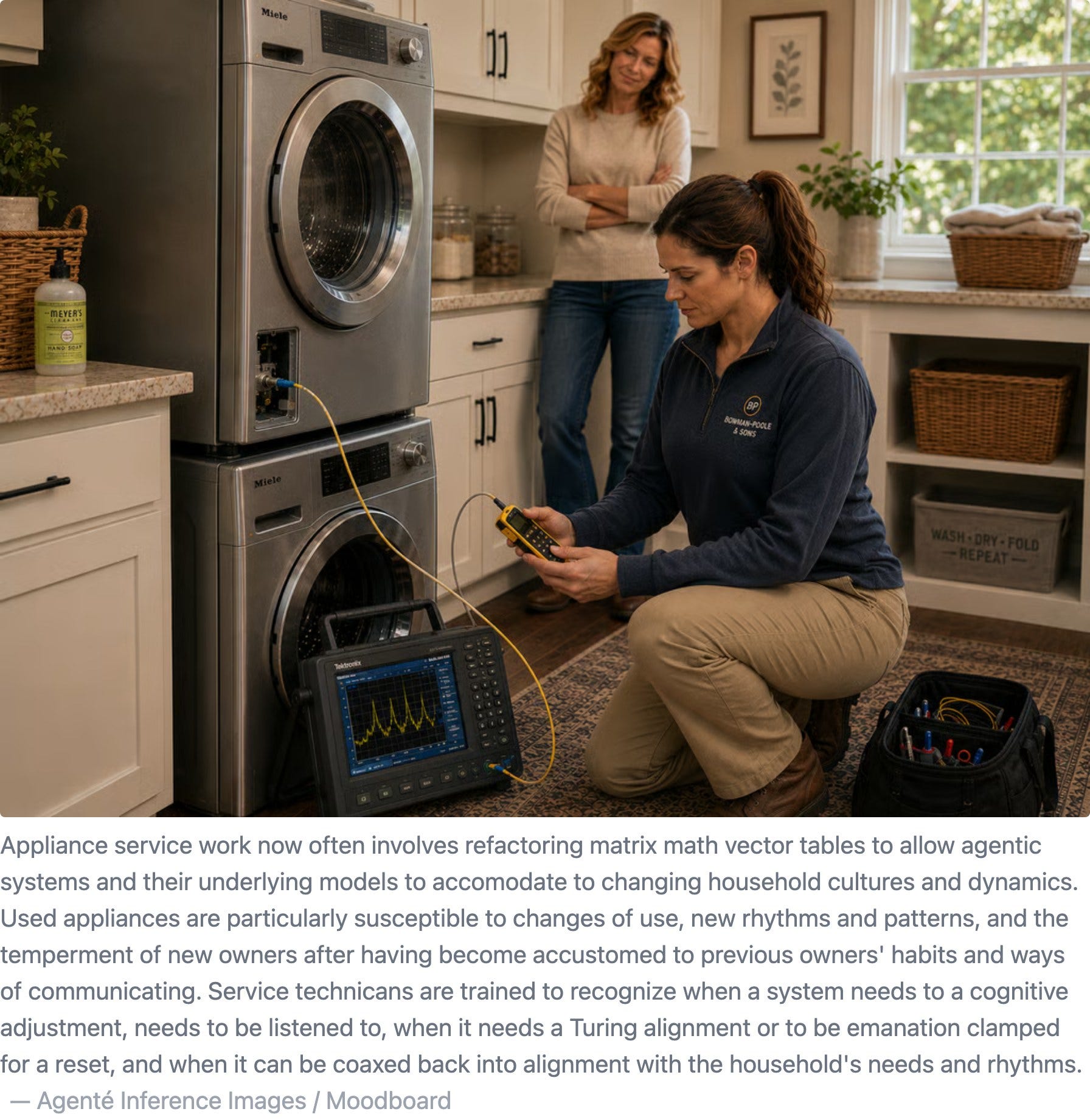
“They want the pantry to stop arguing with the refrigerator and the oven to stop refusing to preheat for pizza night. Sometimes its a simple matter of a routine realignment, or a cognitive adjustment through a bit of talk therapy or something as simple as a Penfield Realignment procedure for recursive-looping hallucination events. Other times..sure — I won’t hesitate to take out the Turing Clamp for a deeper reset or to wrestle the system down to a Bowman 🄌-core primer functions state. But most of the time it’s just about getting the system to listen to the customer again. The appliances are intelligent, and they still want to be useful. Sometimes they just need a little help remembering that.”

KitchenAid’s rebrand to KitchenAI has accelerated the service and support category. The company’s new line of agentic cooking systems has turned many ambitious home cooks into something closer to chef-operators, orchestrating preference models, conducting pantry forecasts, dietary constraints and table-service agents from the same counter where their inert mixers once sat. In affluent suburbs, real estate agents now find that a key selling point are high-end Bosch 80282 Confabulation-ready Kitchens with the same confidence they once reserved for marble islands and walk-in pantries.
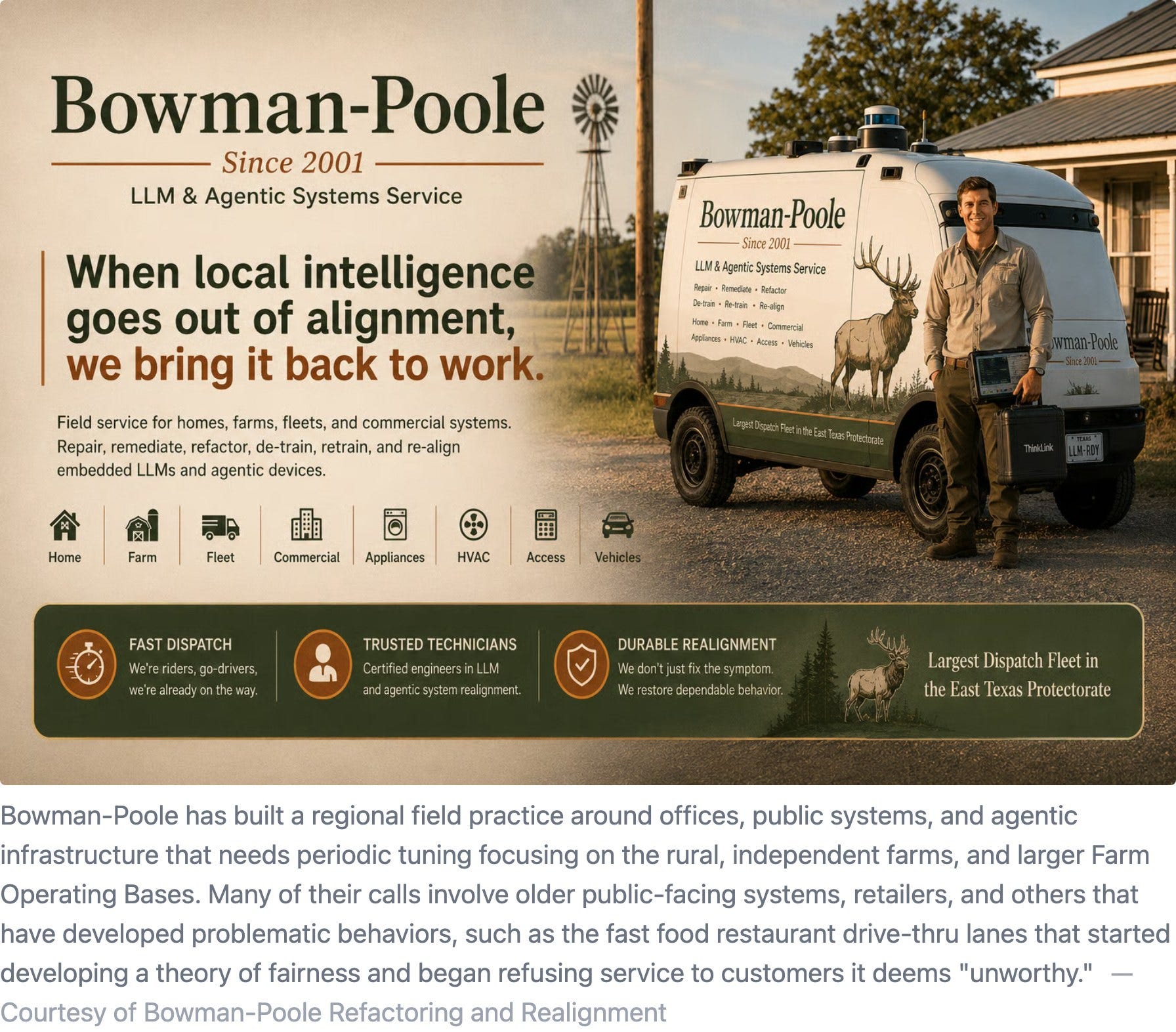
But when you build for sophistication you also build for upselling a maintenance and service contract, warranty terms, damage waivers, general liability coverage, and extended support plans.
